 Carole Levine April 28, 2026
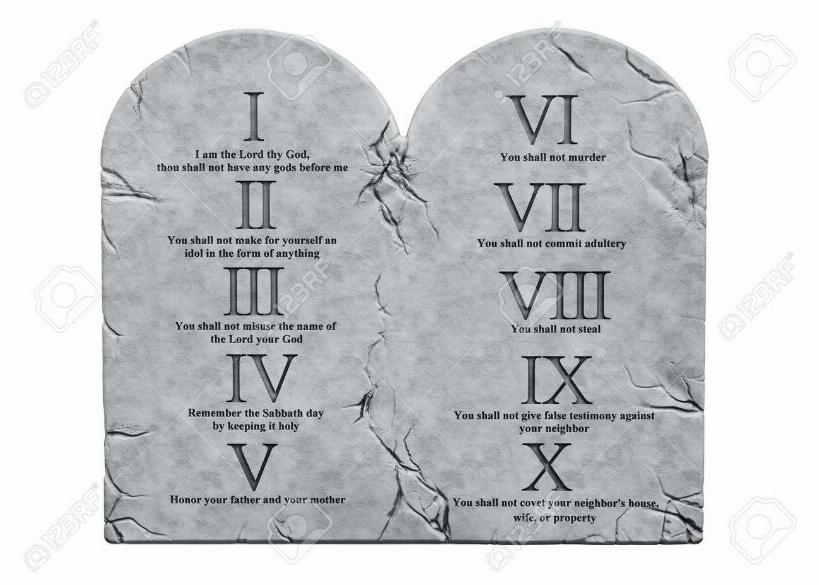
It has not been an easy time for the concept of separation of religion and state. It has been particularly trying if your faith (or lack of faith) does not fall easily into the beliefs shared by the majority of Americans. If you practice some other form of religion (as I do), or if you practice none, the devaluing of your beliefs was upheld this week by the U.S. Court of Appeals for the Fifth Circuit (known for its conservative rulings) when it narrowly upheld a Texas law that requires public schools to display posters of the Ten Commandments in classrooms. The ruling was 9-8, hence the word narrow, and it should be noted that it reversed two lower court decisions. The court majority was careful to indicate that this ruling did not restrict parents’ right to direct their children’s religious upbringing. So, what did this ruling mean?
The ruling indicated that it was much more about the display and does not mandate that teachers to teach about them (even when students ask about them or disagree with them). But the Texas law does mandate that the display must be in a “conspicuous” location in each classroom (indicating a minimum size of 16” X 20”) on a typeface visible from anywhere in the room. And while schools are not required to purchase such posters, they are required to accept them if they are donated. After the law was first passed in Texas, a group of conservative legal groups and churches raised funds to print and distribute posters to school districts across Texas. This past week, Kelly Shackelford, CEO of First Liberty Institute, one of these groups, stated that the Ten Commandments are critical to the nation’s history.
There is no question that this is a case that will eventually find its way to the Supreme Court. Reflecting on what that result might be, brings to mind the Supreme Court decision in Kennedy v. Bremerton School District (2022). This was the “praying football coach” case, where the Court ruled 6-3 that a public high school football coach has a constitutional right to pray on the field after games. The ruling found that coach Joseph Kennedy’s brief, post-game prayers were private speech protected by the First Amendment’s free exercise and free speech clauses, not government speech. Would a similar logic apply to the posting of the Ten Commandments in public school classrooms? Perhaps. Perhaps not. The Bremerton case was considered a case about free expression and free speech via prayer. There was no government mandate involved. The Texas Ten Commandments case involves a legal mandate. While it is specific in the size and wording (there are many different wordings and interpretations of the Ten Commandments) it is also based on a law, passed by the Texas legislature. It also brings to bear the difference between what is private and what is public. Both of these cases could be considered coercive as the goal in each is to engage others in some aspect of religious practice.
Posting something in every classroom where is can viewed from anywhere is certainly a mandate. Determining the specific text/translation of the Ten Commandments that will be posted is also part of the Texas law. Someone suggested to me that they be posted in the original Hebrew, but I don’t think that will pass muster! But the different translated versions among different religions, all of whom value and respect the Ten Commandments will vary. There are different versions of the Ten Commandments, primarily stemming from two main biblical sources—Exodus 20 and Deuteronomy 5—as well as distinct traditions for numbering them. While the stories and commandments are similar, wording variations exist, especially regarding the Sabbath and coveting. Different religious traditions (Jewish, Catholic, Protestant, Orthodox) also organize the commandments differently, though they generally agree on the content. They may even vary depending on the audience. My sister, Susan Topek, is the author of Jewish preschool books, one of which is Ten Good Rules. The translation of the 10 Commandments for preschoolers in this book might not fit the school posters in Texas. When I asked her (before publication, many years ago) how she was explaining “Thou shall not commit adultery”, she smiled and said: “Married people should love each other.” That certainly works for me, but I don’t expect to see that in Texas classrooms.
This issue also places our teachers in the midst of a controversy not of their choosing. It makes both them and their students and families pawns in a game of one upmanship in a conservative agenda. We don’t know what would happen to the teacher who chooses to take down the Ten Commandments poster from his or her classroom wall. Are they breaking the law? Are they subject to arrest or loss of their job? If it is a mandate, this is certainly possible.
Who provides children with religious instruction? If we believe that the First Amendment truly safeguards the separation of religion and state, and families are the ones that get to choose when and how their children receive religious instruction, does this Texas law fly in the face of this and trample these “sacred” rights?
Other states are watching this with plans to jump into this fray. Louisiana passed a similar mandate in 2024, but it has not gone into effect. This week, their Attorney General celebrated the Texas ruling saying the “our law was always constitutional.” Expect more state legislatures to follow.
For those of us who are “strict” followers of the concept of separation of religion and state, we can envision a rocky road ahead. There is no clear path that says the courts will find these laws unconstitutional. They leaned toward a slippery slope with the “praying football coach” case and they could certainly do it again. It behooves us to speak up and point out that each time we allow religious practices to creep into the public square, we lose some of what our nation was founded on. Personal beliefs and practices are just that – personal. They are part of each of us and should be respected but not forced on everyone. Somewhere in my early learning of American history, I recall our founders caring greatly about religious freedom.
From James Madison: “We are teaching the world the great truth that Govts. do better without Kings & Nobles than with them. The merit will be doubled by the other lesson that Religion flourishes in greater purity, without than with the aid of Govt.” — Letter to Edward Livingston, July 10, 1822
From Thomas Jefferson: “The legitimate powers of government extend to such acts only as are injurious to others. But it does me no injury for my neighbor to say there are twenty gods, or no God. It neither picks my pocket nor breaks my leg.” — Notes on the State of Virginia, 1781 – 1785
We need to continue to care about it today. Hopefully, we have a court system that will uphold this foundational construct.